
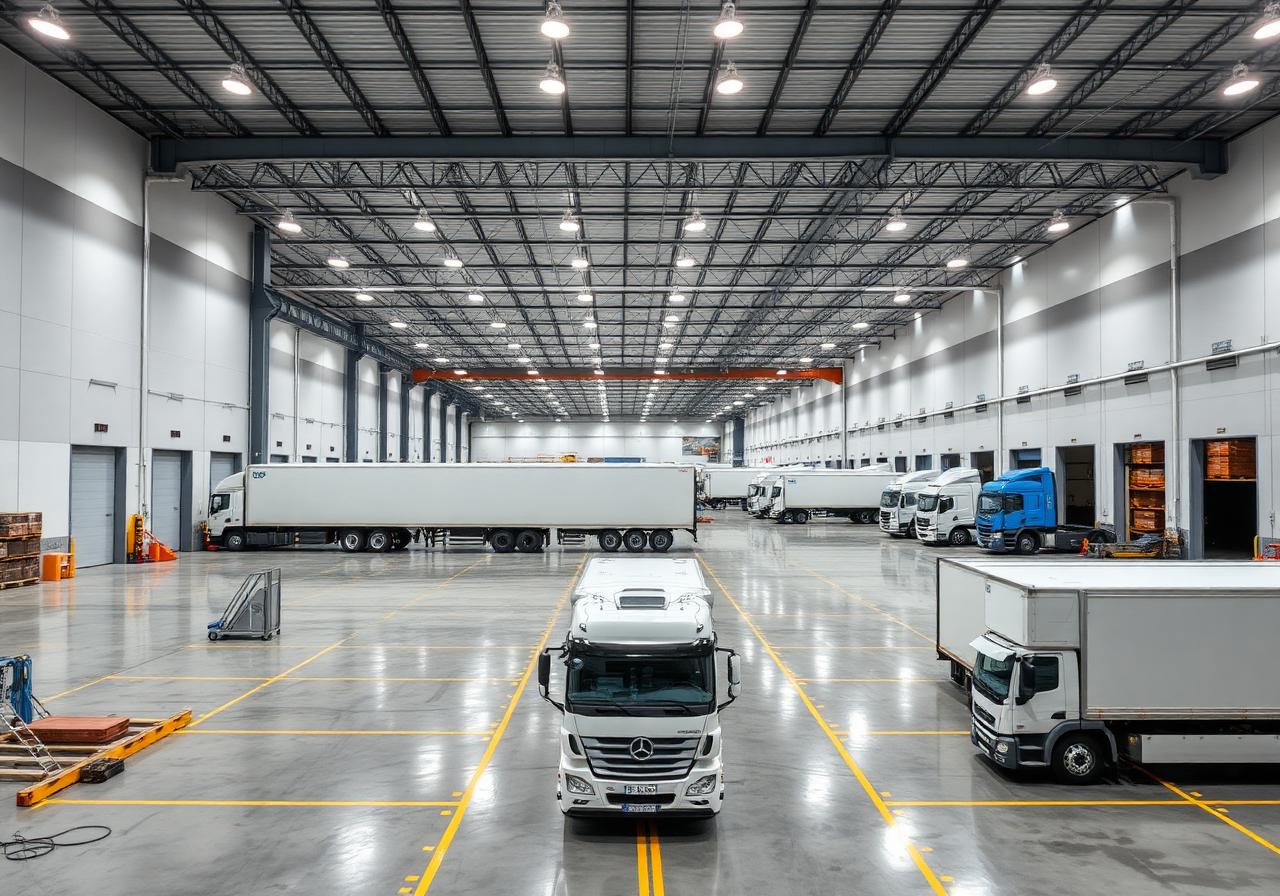
Security Guard Services in Santa Ana, California
Dense commercial blocks, industrial and warehouse corridors, and mixed residential — a city where access control and patrol coverage carry the program.
Security Coverage in Santa Ana, Orange County
Santa Ana mixes civic and commercial blocks with industrial and warehouse corridors, retail along the main arterials, and long-established residential neighborhoods. Buildings often sit close together with shared alleys and multiple street-facing doors, which puts weight on perimeter definition, lighting, gate discipline and consistent patrol timing.
Luminex Security Group provides unarmed officers, commercial and industrial coverage, warehouse and yard security, construction security, mobile patrol and fire watch for qualifying Santa Ana properties. Scope is set against the site's access points, operating hours and the incidents the owner has actually been dealing with.
Security Programs Available in Santa Ana
Programs most often deployed on Santa Ana industrial, commercial and residential properties.
- ServiceUnarmed Security
Uniformed officers for access control, deterrence and daily activity reporting.
View details → - ServiceMobile Patrol
GPS-tracked patrol units with randomized timing and checkpoint verification.
View details → - ServiceConstruction Security
Overnight and weekend coverage for active jobsites, trailers and equipment.
View details → - ServiceFire Watch
Compliance-focused coverage while sprinkler or alarm systems are impaired.
View details → - ServiceRetail Security
Loss prevention and uniformed presence for stores and shopping centers.
View details → - ServiceResidential Security
Gate posts, roving patrols and resident-facing officers for communities and estates.
View details → - ServiceEvent Security
Credentialing, crowd flow and VIP control for events of any size.
View details →
Industries We Protect
- IndustryWarehouses
Gate control, trailer checks and inventory-area monitoring.
View details → - IndustryIndustrial Properties
Perimeter control, contractor access and shift-change coverage.
View details → - IndustryLogistics Yards
Yard checks, driver check-in and after-hours lockdown.
View details → - IndustryCommercial Offices
Lobby posts, tenant access control and after-hours building coverage.
View details → - IndustryRetail Stores
Storefront deterrence, shrink reduction and trespass enforcement.
View details → - IndustryApartments & Multifamily
Resident-facing officers, parking enforcement and night coverage.
View details → - IndustryConstruction Sites
Jobsite access control, material protection and documented patrols.
View details → - IndustryParking Facilities
Structure sweeps, vehicle-crime deterrence and incident reporting.
View details →
Security Considerations for Santa Ana Properties
Gate control is the single highest-leverage post on an industrial or warehouse property. One controlled entry point, a closed gate as the default state, and an officer who checks every vehicle in and out will prevent more loss than any number of interior rounds. The practical requirements are unglamorous: a gate that latches, a light that works at the check position, a clipboard or tablet within reach, and a written rule for what happens when a driver arrives without paperwork or outside the delivery window.
Vehicle logging only helps if the log is usable later. On sites where we run gate posts, officers record arrival and departure times, carrier or company, trailer or unit numbers where applicable, and the person who authorized entry. That gives a facility manager something to match against shipping records when a discrepancy appears, and gives an insurer a timeline. Photographing the seal or trailer number on high-value loads is a reasonable addition where the property requests it.
Delivery windows and dock awareness shape the patrol schedule. A facility receiving between 5 a.m. and 11 a.m. has a different risk profile at noon than at midnight, and rounds should concentrate where activity is not. Officers cover dock doors that are standing open with no attendant, trailers left unlocked or unsealed, and staging areas where product sits outside the fence line. Where a dock is unattended by design, the post orders should say who is allowed to open it and what the officer does if it is found open.
Shift changes are a recurring exposure and an easy one to cover. When fifty people move through a gate in fifteen minutes, tailgating on foot and in vehicles becomes trivial, badge checks get waved through, and doors get propped. Scheduling a round or a temporary post to overlap the change — rather than starting a patrol at the top of the hour — closes the gap. The same logic applies at end of shift, when material tends to leave the property.
Perimeter patrol on close-set commercial blocks means walking the boundary, not driving past it: fence lines and gaps behind buildings, rear service doors, roof access ladders, alley-side dumpsters and utility enclosures, and lighting that has failed since the last round. Officers note failures as findings, because a burned-out fixture over a loading area is an actionable maintenance item, not a footnote. Where a property runs limited hours, randomized mobile patrol with checkpoint scans often covers the same ground more economically than a continuous post.
Retail and residential coverage in the city follows familiar patterns: storefront presence and closing support along the busier corridors, and evening posts with roving patrol at multifamily properties, both with documented handling of loitering and trespass. Construction sites receive overnight and weekend officers focused on material and equipment protection, with subcontractor access funneled through one gate and documented rounds through storage and laydown areas.
Closed-gate default with every vehicle checked in and out, and a written rule for arrivals outside the delivery window.
Times, carrier, trailer or unit numbers and the authorizing person — recorded so a manager or insurer can reconstruct a timeline.
Rounds weighted to the hours activity stops, with unattended open dock doors and unsealed trailers treated as findings.
Rounds or a temporary post scheduled across shift change, when tailgating and propped doors are easiest.
Fence gaps, rear doors, roof ladders and failed lighting checked on foot and logged as maintenance findings.
How the Program Is Run
Patrol routes, checkpoint scans and incident reports are logged through the Luminex system, so coverage on your property is verifiable rather than assumed.
California PPO-licensed operation with BSIS-registered officers and current liability coverage.
Written from a walkthrough of the property, not copied between accounts.
Timestamped reports, photographed findings and incident records ownership can review.
Field supervision on rotation and management reachable outside business hours.
Frequently Asked Questions
Do you provide warehouse security in Santa Ana?
+
Yes. Warehouse programs generally center on a controlled gate with vehicle check-in and check-out, dock-area awareness, perimeter rounds and documented patrols timed around the facility's receiving and shipping windows.
Can security officers monitor gates and loading areas?
+
Yes. A gate post keeps the gate closed as its default state, checks vehicles in and out, and records times, carrier, trailer or unit numbers and who authorized entry. Loading areas are covered on rounds, with open unattended dock doors and unsealed trailers reported as findings.
Do you provide industrial property patrol in Santa Ana?
+
Yes. Industrial patrol is walked rather than driven wherever practical, covering fence lines and gaps, rear service doors, roof access, utility enclosures and lighting failures, with checkpoint scans confirming the officer reached each area.
How do you handle shift changes at a Santa Ana facility?
+
Rounds or a short temporary post are scheduled to overlap the change rather than starting at the top of the hour, because foot and vehicle tailgating and propped doors are easiest during that window. The same coverage applies at end of shift.
Can mobile patrol replace a full-time officer on a limited-hours site?
+
Often, yes. For properties that only need after-hours attention, randomized GPS-logged patrol visits with checkpoint scans cover the same ground as a standing post at lower cost. Sites with continuous receiving or high-value staging usually still warrant a fixed gate post.
Do you provide fire watch services in Santa Ana?
+
Yes. Fire watch is assigned when sprinkler, alarm or suppression systems are impaired, with logged rounds at the interval the authority having jurisdiction requires and documentation suitable for the fire authority and the property insurer.
Can I request a security proposal for my Santa Ana property?
+
Yes. Provide the property type, address, coverage hours and the incidents you are trying to address through the proposal request form and a representative will follow up to confirm scope.
Need security in Santa Ana?
Tell us about your property, location, schedule and security requirements.